
A Comprehensive Guide: Choosing Between Flap Discs, Fiber Discs, and Depressed Center Grinding Wheels
In the world of abrasive tools, selecting the right product for the job is paramount to achieving efficiency, quality, and cost-effectiveness. For professionals working with metal fabrication, welding, and general surface preparation, three types of abrasive discs are ubiquitous: Flap Discs, Fiber Discs (also commonly referred to as Resin Fiber Discs or “flat discs”), and Depressed Center Grinding Wheels (often called “cutting wheels” or “Type 27 wheels”). While they might look similar to the untrained eye, their construction, performance, and ideal applications are vastly different.
This guide will delve into the distinct characteristics of each, empowering you to make an informed choice for your specific needs.
Flap Discs: The Versatile All-Rounder
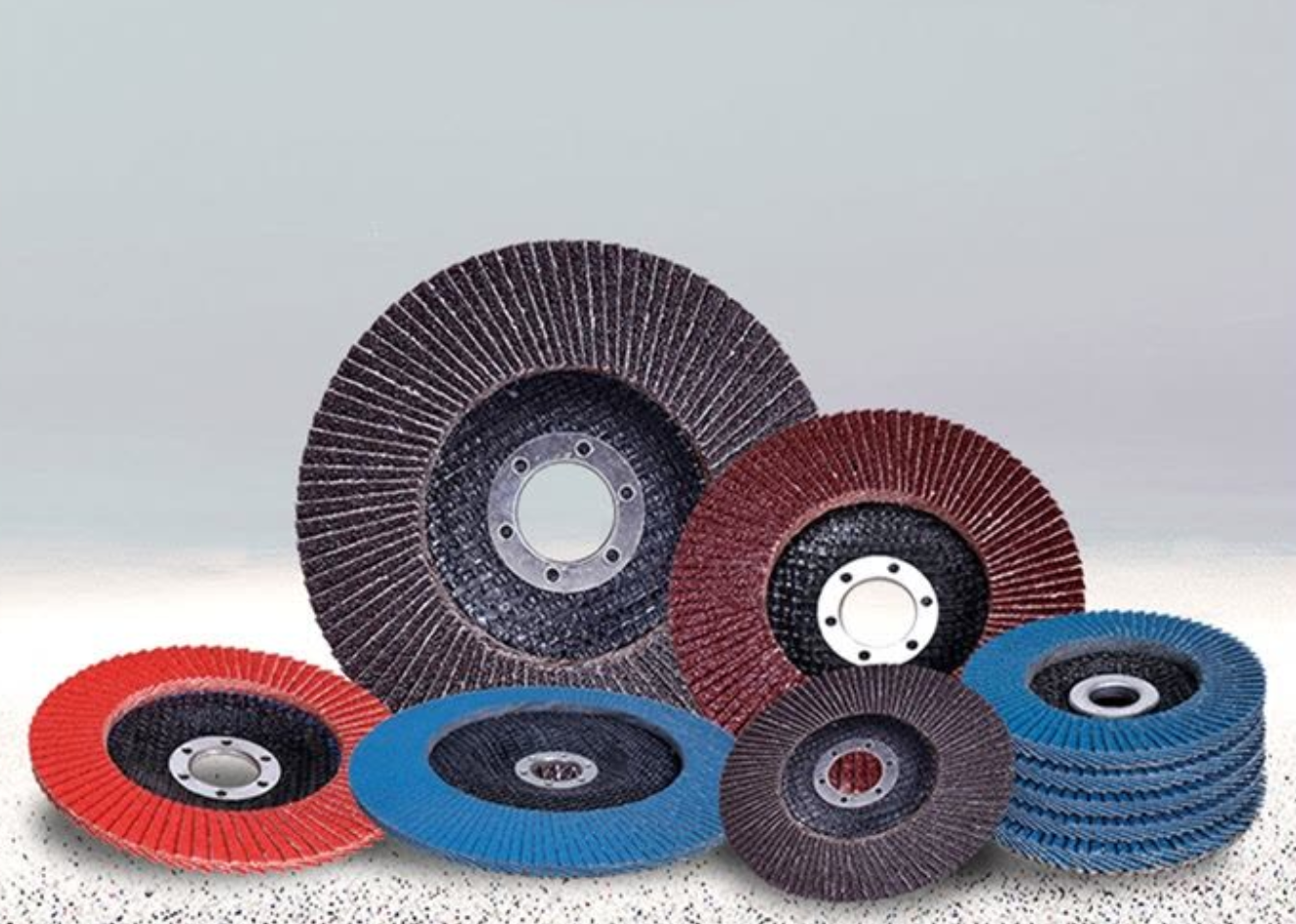
What is it?
A flap disc is a composite grinding tool consisting of multiple, overlapping abrasive flaps arranged radially around a central hub. These flaps are typically made of cloth backing and coated with abrasive grains (such as aluminum oxide, zirconia alumina, or ceramic) bonded with resin.
Manufacturing Process:
The flaps are first produced by coating large rolls of cloth with abrasive grains and resin. These sheets are then precisely cut into individual flaps. The flaps are layered and bonded under pressure and heat to a reinforced fiberglass or plastic backing plate, which is then mounted onto a depressed center (Type 29) or flat (Type 27) hub. The overlapping design is key to its functionality.
Grinding Performance & Characteristics:
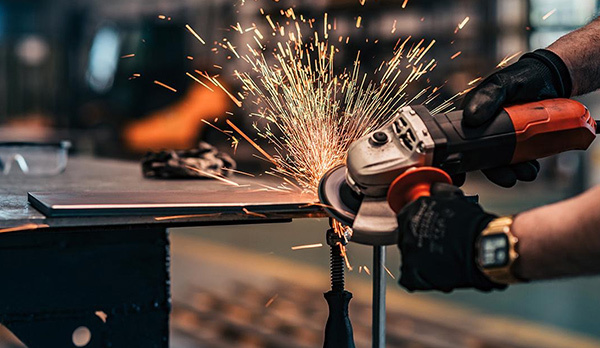
- Action: Contributes to a grinding and finishing action. As the flaps wear down, new, sharp abrasive grains are continuously exposed.
- Finish: Produces a much smoother surface finish compared to a rigid disc. It effectively bridges the gap between aggressive stock removal and fine finishing, often eliminating the need for a secondary finishing step.
- Contact Area: The flexible flaps conform to the workpiece’s contours, making them ideal for curved or irregular surfaces.
- Heat Management: Generates less concentrated heat than a rigid wheel, reducing the risk of burning the material, especially on thin metal or stainless steel.
- Consistency: Provides a consistent finish throughout its lifespan.
Primary Applications:
- Weld seam blending and smoothing
- Deburring and edge breaking
- Surface cleaning and preparation for painting
- Removing rust, scale, and old coatings
- Working on contoured surfaces like tubes or castings
Other Considerations:
- Grit Range: Available in a wide range, from coarse (e.g., 40-60 grit) for rapid material removal to very fine (e.g., 120-240 grit) for finishing.
- Type 29 vs. Type 27: Type 29 (conical) is optimized for aggressive material removal at a 15-25 degree angle. Type 27 (flat) is better for surface blending and finishing at a 0-15 degree angle.
Fiber Discs (Resin Fiber Discs): The Workhorse for Flat Surfaces

What is it?
A fiber disc is a rigid, flat disc made of a thick, vulcanized fiber backing. The abrasive grain (aluminum oxide, zirconia, etc.) is firmly bonded to this backing with a strong resin. They are designed to be used with a backup pad on a right-angle grinder or disc sander.
Manufacturing Process:
The vulcanized fiber backing is a dense, paper-like material treated under heat and pressure to become strong and semi-flexible. A maker coat of resin is applied, the abrasive grain is electrostatically projected onto it for an even, sharp coat, and then a size coat is applied to lock the grains in place. The disc is then cured in an oven to harden the resin.
Grinding Performance & Characteristics:
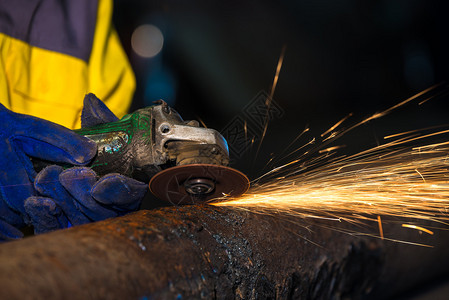
- Action: Primarily a grinding and stock removal action. It is a rigid tool that cuts aggressively.
- Finish: Leaves a more pronounced, linear scratch pattern compared to a flap disc. It is generally not considered a finishing tool but a tool for rapid material removal.
- Contact Area: The rigid backing provides a flat, consistent cutting surface, making it highly efficient on large, flat areas but unsuitable for complex contours.
- Cutting Speed: Can be extremely fast for stock removal on flat surfaces.
- Durability: The vulcanized fiber backing is highly durable and heat-resistant.
Primary Applications:
- Heavy-duty stock removal on large, flat steel plate
- Leveling welds and removing excess material
- Cleaning and preparing large surface areas
- Used extensively in shipbuilding, heavy equipment manufacturing, and structural steel work.
Other Considerations:
- Grit Range: Typically found in coarser grits (24-80 grit) for aggressive work.
- Backup Pad: Requires a compatible rubber or plastic backup pad for the grinder. A soft pad can offer a slight degree of conformity.
Depressed Center Grinding Wheels (Cutting & Grinding Wheels): The Specialized Powerhouse

What is it?
This is a rigid wheel, typically with a “depressed center” (Type 27/42), which allows for secure mounting with a raised flange nut. They are divided into two main sub-categories: Cut-Off Wheels (thinner) and Grinding Wheels (thicker).
Manufacturing Process:
These wheels are made by mixing abrasive grains with resins and other strengthening materials (like fiberglass mesh for reinforcement). The mixture is pressed into a mold under high pressure and then thermally cured to create an incredibly strong, rigid, and brittle bond. The fiberglass mesh is embedded to contain the wheel if it breaks under stress.
Grinding Performance & Characteristics:
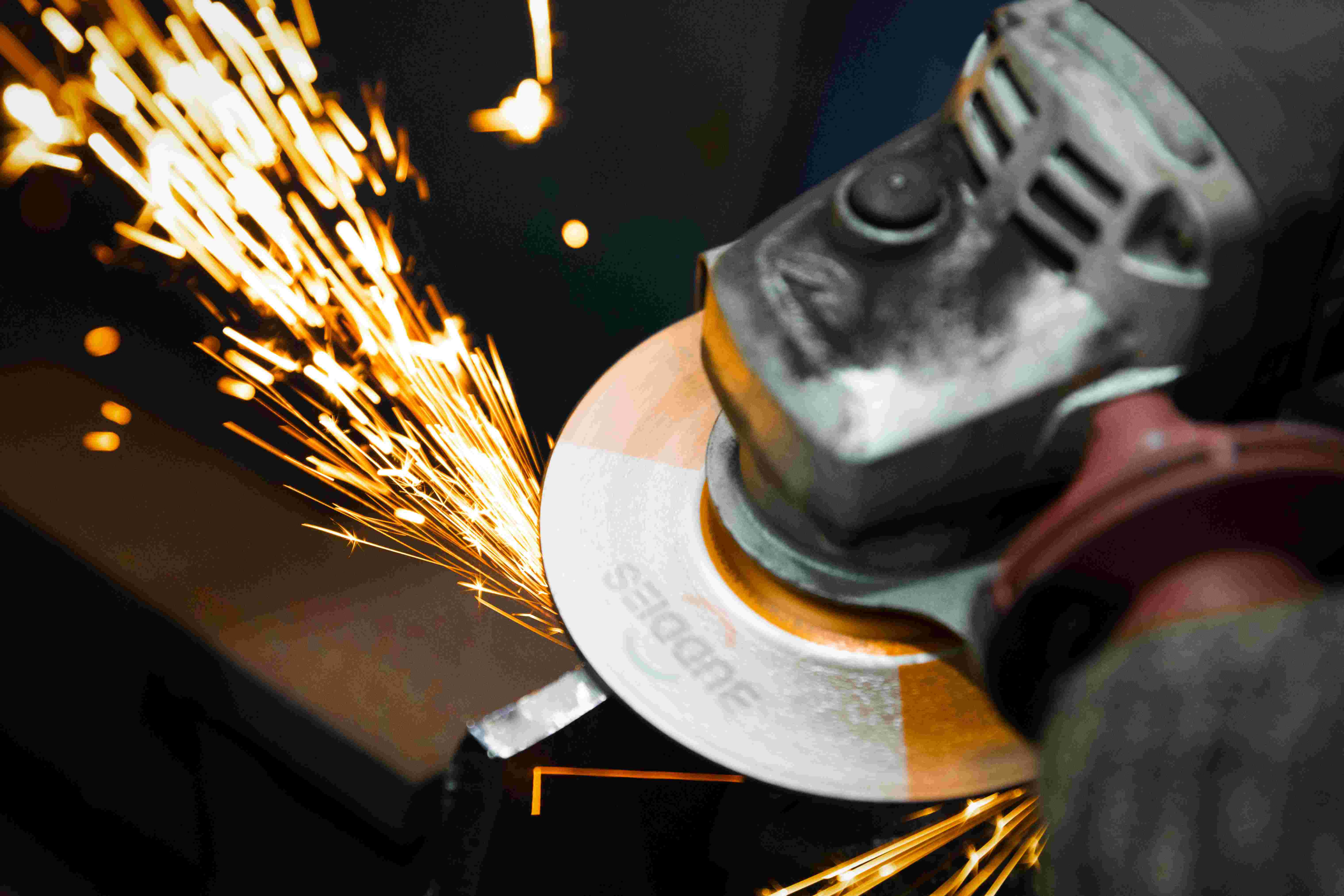
- Action: Highly specialized for either fast, clean cutting or heavy-duty grinding and notch removal.
Cut-Off Wheels (e.g., 1mm-3mm thick): Designed for a slicing action. They remove a minimal amount of material (the “kerf”) to make precise cuts in metal, pipe, and rebar. They are not meant for side pressure.
Grinding Wheels (e.g., 6mm-10mm thick): Designed to withstand significant side pressure for grinding down welds, notches, and heavy imperfections.
- Finish: The finish is not a consideration; the goal is pure, aggressive material separation or removal.
- Efficiency: Unmatched in their respective specialties. A cut-off wheel is the fastest way to cut metal with an angle grinder.
- Rigidity: Absolutely rigid with no conformity, making them unsuitable for finishing or curved surfaces.
Primary Applications:
- Cut-Off Wheels: Cutting metal stock, pipes, rods, bolts, and sheets.
- Grinding Wheels: Removing heavy weld beads, cleaning up casting flashes, and severe surface defect removal.
Other Considerations:
- Safety: These are the most dangerous of the three if used improperly. Always use the guard, wear a face shield, and ensure the wheel is rated for a higher RPM than your tool.
- Wear: They wear down by shedding grains and becoming smaller in diameter, unlike flap discs which self-sharpen.
Head-to-Head Comparison & Selection Guide
| Feature | Flap Disc | Fiber Disc | Depressed Center Wheel |
| Primary Action | Grinding & Finishing | Aggressive Stock Removal | Cutting / Heavy Grinding |
| Surface Finish | Smooth, consistent | Rough, linear scratches | Not Applicable |
| Contour Following | Excellent | Poor (Flat surfaces only) | Poor |
| Stock Removal Speed | Good to Very Good | Excellent (on flats) | Excellent (Specialized) |
| Heat Generation | Lower | High | Very High (localized) |
| Versatility | High | Medium | Low (Specialized) |
| Common Grit Range | 40 – 240 | 24 – 80 | N/A (Not grit-based) |
How to Choose: A Simple Decision Matrix

Follow this logic to select the right tool:
- What is my primary goal?
- “I need to CUT something apart.”
Tool of Choice: Depressed Center Cut-Off Wheel.
Reason: Nothing is faster or more efficient for making clean cuts in metal.
- “I need to remove a LARGE amount of material from a FLAT surface quickly.”
Tool of Choice: Fiber Disc.
Reason: Its rigidity and full-face contact make it a powerhouse for leveling welds and cleaning plates.
- “I need to GRIND DOWN a weld, burr, or imperfection and leave a SMOOTH, FINISHED surface.”
Tool of Choice: Flap Disc.
Reason: It combines aggressive grinding with a fine finish in one step, saving time and money.
- “I am working on a CURVED or IRREGULAR surface.”
Tool of Choice: Flap Disc.
Reason: Its flexible flaps conform to the shape, providing even material removal without gouging.
- What about cost-efficiency?
While a fiber disc may have a lower initial cost, a flap disc often provides a lower cost-per-job because it performs two operations (grinding and finishing) with one tool and one setup.
Depressed center wheels are consumables for specific tasks; their efficiency in that task is their value proposition.
Conclusion

Understanding the fundamental differences between flap discs, fiber discs, and depressed center wheels is crucial for any workshop. There is no single “best” tool—only the best tool for a specific job.
- Reach for a Depressed Center Wheel when you need to cut or perform heavy, dedicated grinding.
- Choose a Fiber Disc when your priority is maximum speed on large, flat surfaces.
- Make the Flap Disc your go-to for the vast majority of blending, finishing, and contouring work, where versatility and a quality finish are required.
By matching the tool to the task, you will not only achieve superior results but also improve workplace safety, boost productivity, and optimize your consumable spending.
This post is also available in:


Leave a Reply
Want to join the discussion?Feel free to contribute!