
From Demand Growth to Smarter Tool Selection: New Developments in the Stone Diamond Tools Market
The global stone-processing industry is moving beyond a narrow focus on cutting speed toward a better balance of accuracy, tool life, safety, and total processing cost. This article examines the direction of the stone diamond tools market from the perspectives of demand, technology, application matching, regional differences, and purchasing risk.
1. Demand is not simply increasing; it is becoming more exacting
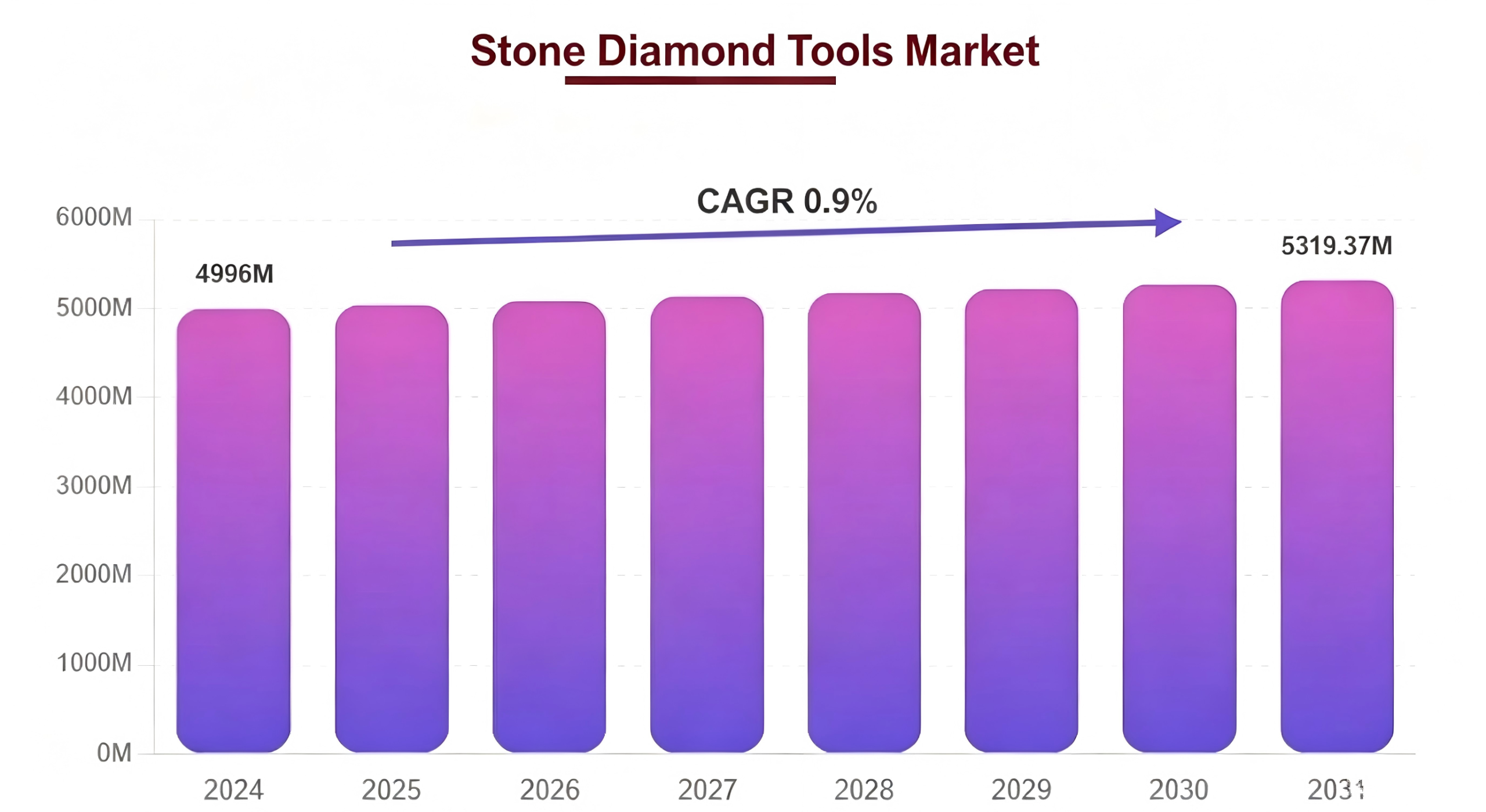
Stone diamond tools use metal, resin, vitrified, or other bonding systems to hold diamond grains in the working layer. They are designed for cutting, drilling, grinding, and polishing granite, marble, limestone, and engineered stone. Because diamond combines exceptional hardness with heat resistance, these tools are suitable for continuous processing and applications that require controlled dimensions or a clean surface finish. According to Intel Market Research, the global stone diamond tools market is projected to rise from approximately USD 5.27 billion in 2025 to USD 6.12 billion by 2032. This is not an explosive expansion. It is better understood as evidence of stable, long-term demand from stone fabricators and construction-related users. More importantly, market growth is accompanied by higher expectations. Buyers increasingly evaluate cutting speed together with edge quality, tool consistency, operating safety, usable life, and the ability of a supplier to deliver the same performance across repeat orders.
2. Three factors are upgrading purchasing requirements
First, urban construction, renovation projects, countertops, flooring, and architectural decoration continue to create demand for processed stone. As a result, fabricators pay closer attention to straight cuts, dimensional accuracy, chipping control, and tool life. Second, improvements in synthetic diamond production, bond formulations, and joining technologies are widening the range of available solutions. Laser-welded tools are commonly considered for higher-load operations because the joint must tolerate heat and mechanical stress, while electroplated tools can be useful when a defined profile or complex shape is required. Third, dust control and jobsite safety requirements are encouraging wider use of wet-cutting systems. The source material states that wet-cut diamond tools represent about 68% of sales in developed markets. This figure indicates a general direction, but it should not replace application analysis. A suitable method still depends on the stone, machine design, water supply, required finish, operating environment, and applicable local regulations.
3. Market growth does not make purchasing simpler
Initial price remains a significant barrier, particularly for smaller workshops and distributors testing a new product range. The source indicates that high-quality diamond segments and saw blades may cost three to four times more than conventional abrasive tools. It also estimates that the productivity gap between trained and untrained operators can exceed 30%. Technique, feed rate, machine condition, cooling, and correct tool mounting can therefore change the result even when the same blade is used. In addition, diamond grains and metal powders are reported to account for 60% to 70% of production cost, meaning that raw-material volatility can affect both quotations and supply stability. For this reason, a unit price comparison is incomplete. Users should record cutting length per tool, change frequency, chipping or rejection rate, processing time, downtime, and rework cost. A higher-priced blade may be economical if it produces more acceptable parts, while a lower-priced option may become expensive when performance varies between batches.

4. Product development is moving toward material-and-machine matching
Diamond sawing tools remain a central product category in stone processing, especially for shaping hard materials and making accurate cuts in architectural slabs. However, a general-purpose description is rarely enough for reliable selection. Granite is hard and abrasive, so the tool must balance cutting ability, bond wear, diamond exposure, and segment retention. Marble normally requires greater attention to chipping, staining risk, and the quality of the finished edge. Engineered stone should be evaluated according to its composition, thickness, reinforcement, machine parameters, and cooling conditions. Laser-welded structures are increasingly used in demanding applications because of their joint strength and resistance to heat. At the same time, automated cutting lines and AI-assisted monitoring systems are raising expectations for standardized dimensions and repeatable performance. If a tool varies in flatness, balance, segment geometry, or cutting behavior, automation can magnify the problem. Consistent batches and stable specifications therefore become as important as peak speed in a single test.
5. Opportunities come from regional differences and premium applications
Asia-Pacific combines established manufacturing capacity with expanding end-user demand. Infrastructure investment and stone processing in China, India, and Southeast Asia support the move toward more specialized products. Europe generally places greater emphasis on precision, low vibration, reduced noise, environmental considerations, and compatibility with automated machinery. In North America, demand is connected with building renovation, commercial construction, and concrete or composite-material processing. Premium architectural projects in the Middle East create opportunities for customized blades, grinding tools, and polishing solutions, while limited local manufacturing in parts of Africa leaves room for imported products and distributor inventories. Brazil’s active natural-stone industry continues to support sawing and drilling demand in South America. The source material also estimates average annual growth of about 9.5% for the global premium-stone market. Countertops, flooring, facades, and decorative construction may therefore require tools that offer cleaner edges, repeatable finishes, and lower rejection rates rather than only a low initial price.
6. Future competition will focus on total processing cost
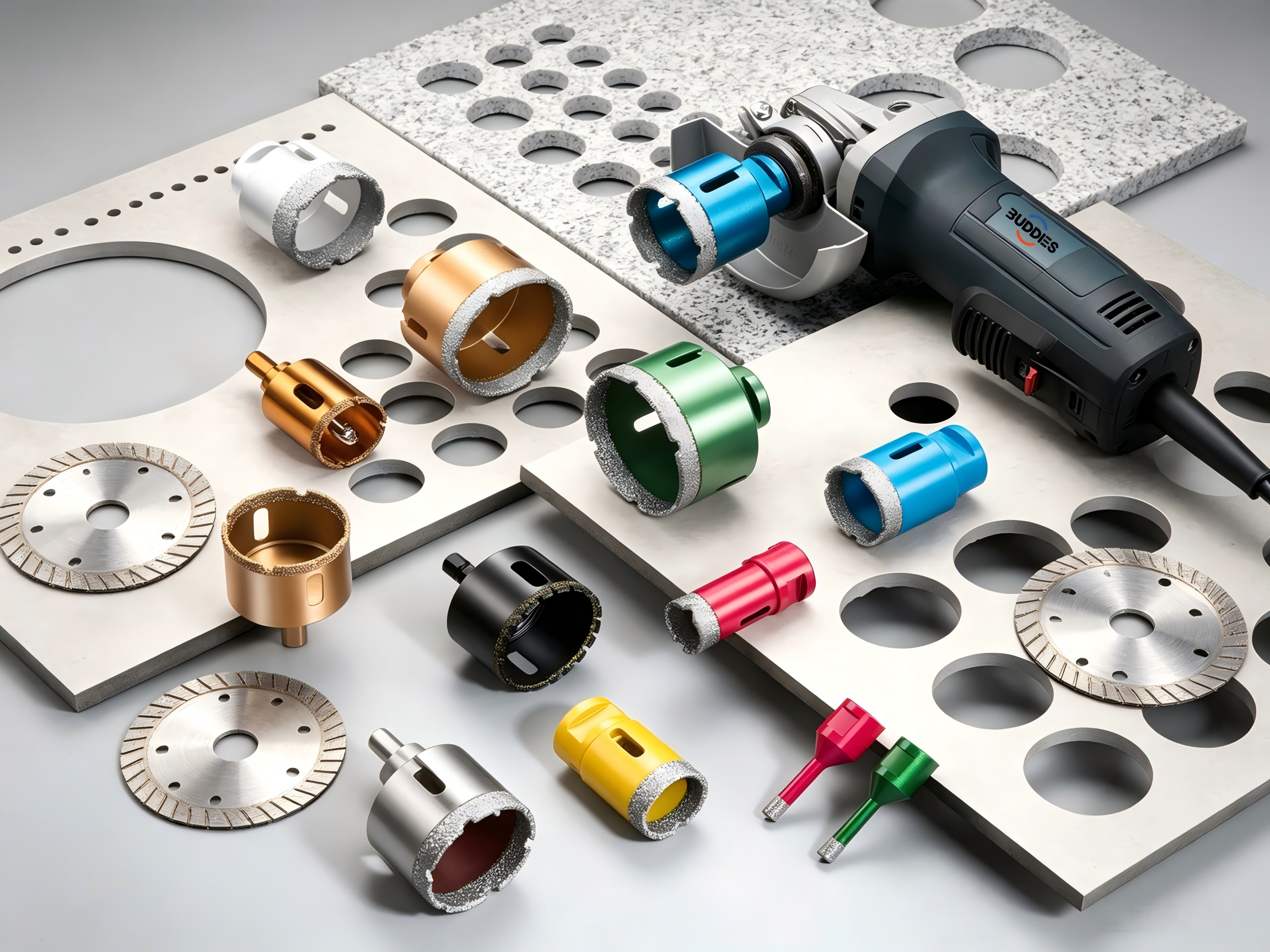
In the coming years, the main competitive issue will not be whether a stone diamond tool can simply cut harder or faster. The more practical goal is to reduce variation throughout the processing operation. For fabricators and distributors, a valuable tool must balance productivity, service life, edge quality, safety, inventory stability, and dependable long-term supply. Suppliers should be able to recommend products according to the stone type, machine power, rotational speed, feed conditions, cutting depth, and wet- or dry-cutting method. Clear specifications and application guidance also reduce the risk of unsuitable products being tested under the wrong conditions. Batch inspection is equally important because repeat orders must reproduce the approved performance, not merely the appearance of the original sample. When selection support, manufacturing consistency, and supply planning work together, buyers can reduce complaints, unplanned downtime, and replacement frequency while building a more predictable basis for long-term purchasing.
This post is also available in:


Leave a Reply
Want to join the discussion?Feel free to contribute!