
How to Choose Industrial Non-Woven Abrasive Pads: Minerals, Grades, and Metal Finishing
At first glance, an industrial non-woven abrasive pad looks too soft to remove discoloration, blend a weld, or leave a consistent grain on a curved surface. Yet its performance comes from a combination of the fiber web, abrasive mineral, resin bond, and grade—not its color alone. Treating it as a kitchen sponge can lead to choosing a pad that barely cuts. Treating it as sandpaper can leave scratches that are difficult to remove from a finished surface. The useful question is not whether the pad is “gentle,” but whether its construction and grade fit the material, defect, and required finish.
Industrial Non-Woven Pads Are Not Kitchen Sponges
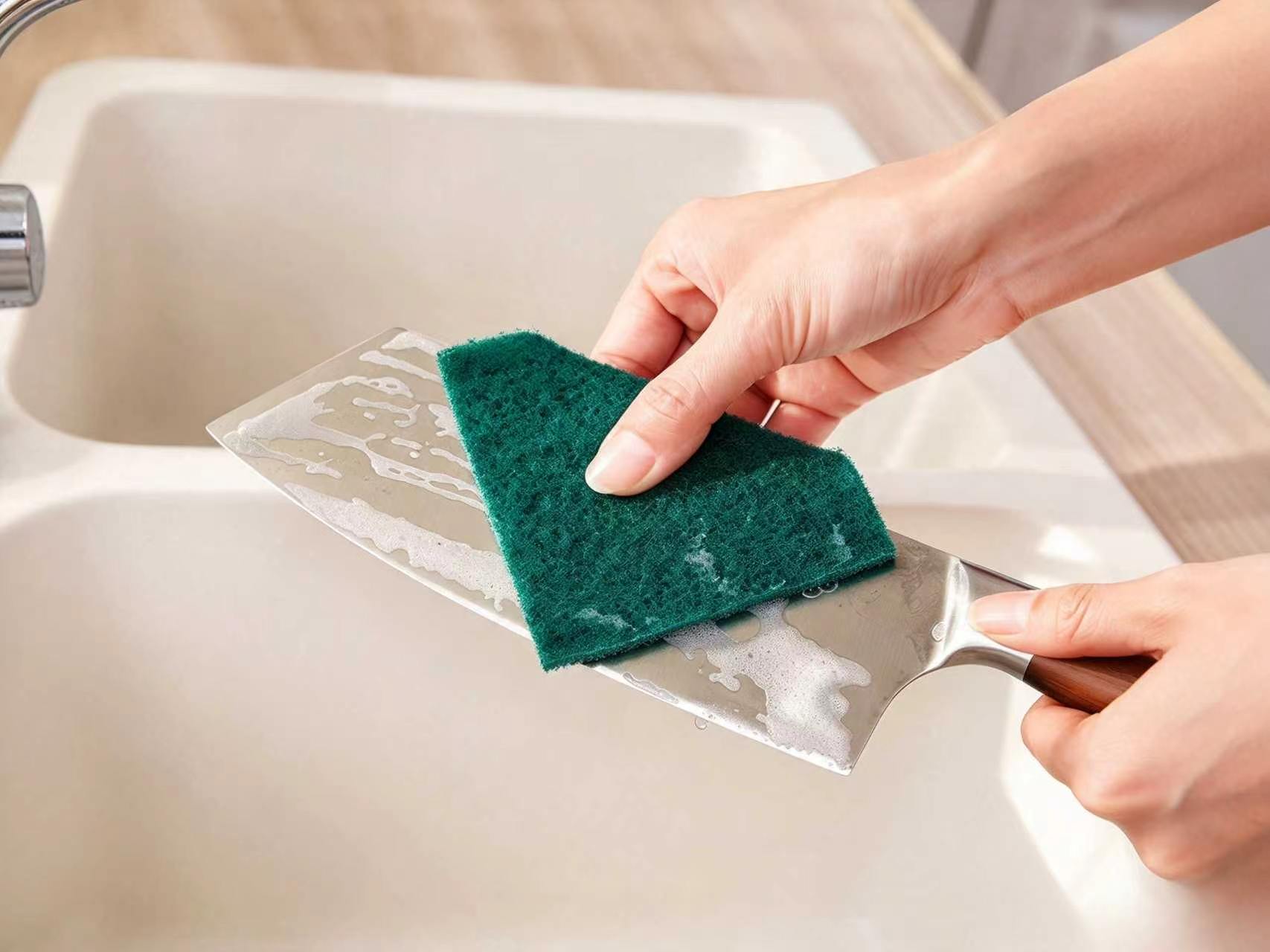
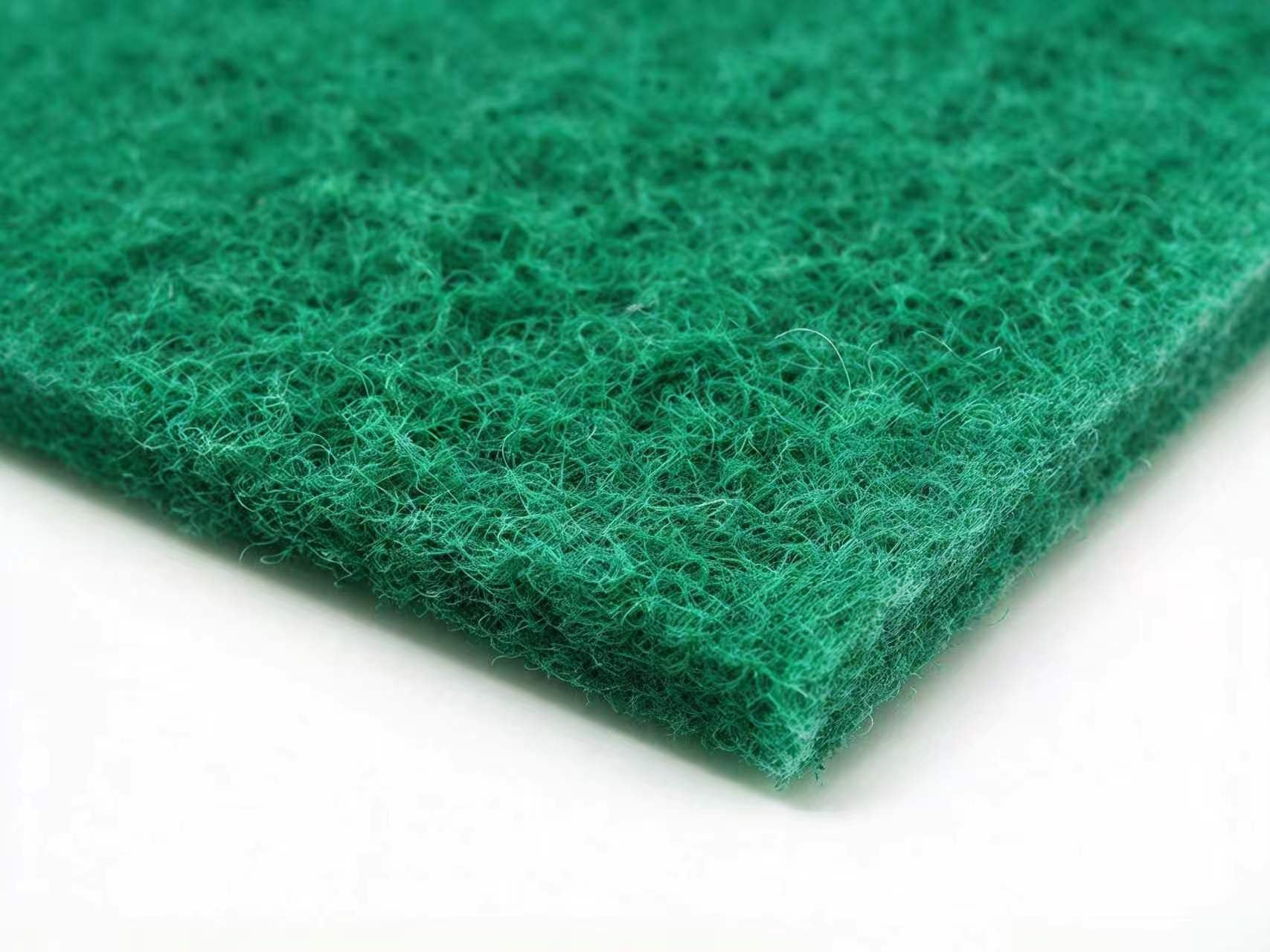
Industrial hand pads belong to the non-woven abrasive family. A typical product combines a three-dimensional web of nylon or other synthetic fibers with abrasive grains held by a resin bond. The open structure conforms to rounded edges, holes, and transitions around a weld. Spaces in the web also provide somewhere for swarf to go, helping reduce loading during use. This makes the pad useful for blending, light deburring, graining, and preparation before coating. It is not the first tool for heavy weld slag, deep scratches, or a pronounced step. Remove substantial stock with a suitable belt, grinding wheel, or other aggressive abrasive first; use the pad to refine and unify the resulting surface.
Abrasive Content: Do Not Ask Only for a Percentage
A higher abrasive content can suggest greater cutting potential, but a percentage alone is not a reliable basis for comparing pads from different brands. Fiber density, mineral type and particle size, resin hardness, pad thickness, and the openness of the web all affect contact, wear, and material removal. Many suppliers do not publish a directly comparable abrasive weight percentage. For purchasing, ask for the abrasive mineral, grade, thickness, suitable substrates, and recommended operation. If a supplier can identify only the color, it is difficult to specify the same performance again for a repeat order. A documented product code and an approved trial sample are more useful than an unsupported claim about a universal percentage.
Why Grade Matters More Than a Grit Conversion
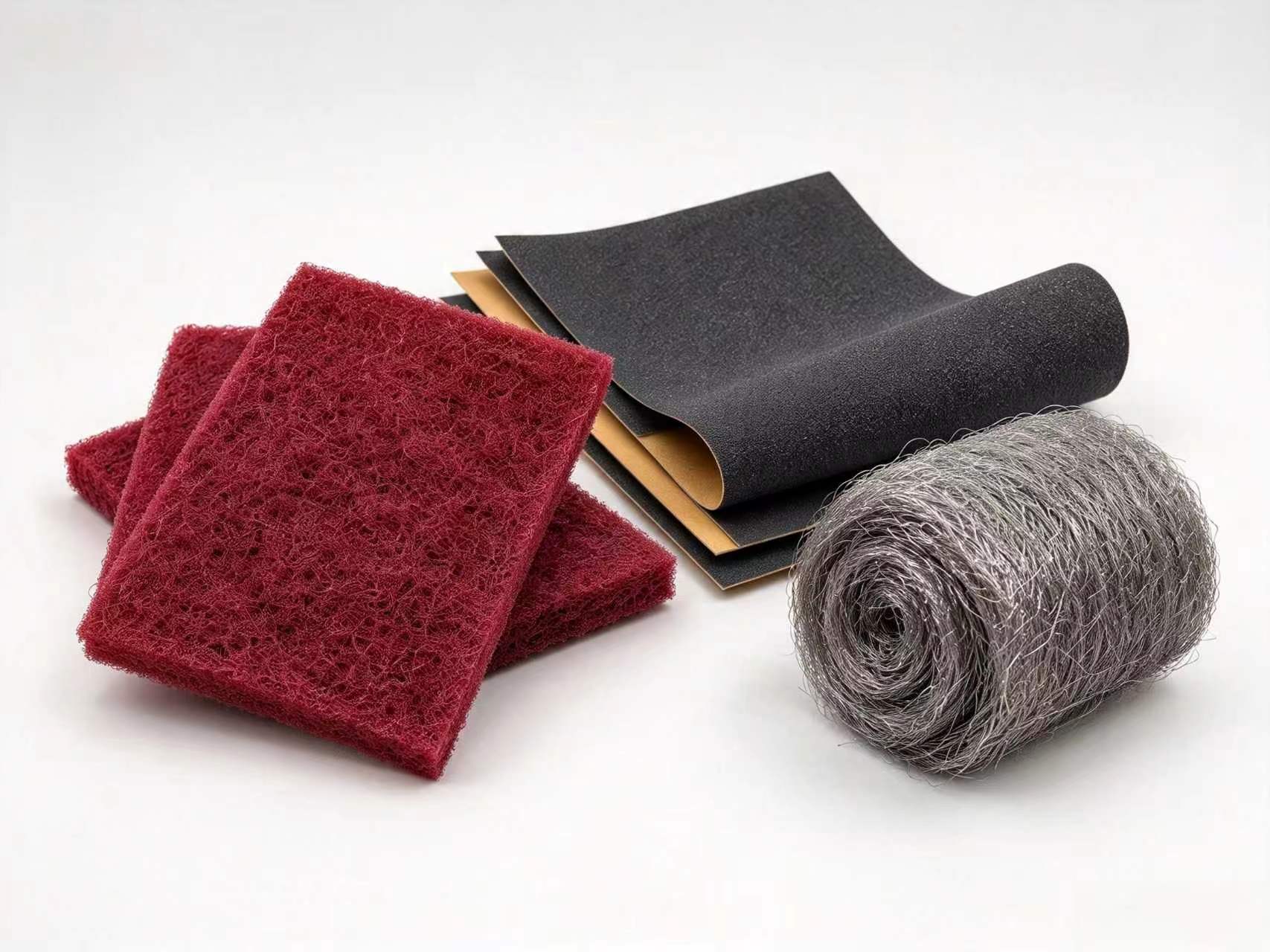
Non-woven pads are commonly labeled coarse, medium, fine, very fine, or ultra fine. These are product grades, not a universal one-to-one conversion to coated-abrasive sandpaper grit numbers. Within a 3M hand-pad range, for example, 7440 is a tan, medium-grade aluminum oxide pad; 7446 is a gray, medium-grade silicon carbide pad; 7447 is a maroon, very-fine aluminum oxide pad; and 7448 is a gray, ultra-fine silicon carbide pad. Even within one maker’s range, color alone does not uniquely identify mineral or aggressiveness. When changing a brand or product code, check both grade and mineral, then test on a representative piece to see the actual scratch pattern. Do not translate a color into a fixed grit number.
Aluminum Oxide or Silicon Carbide?
Aluminum oxide has a Mohs hardness of about 9. It is relatively tough and durable and is commonly used for routine cleaning, blending, and graining of stainless steel, carbon steel, and aluminum alloys. Silicon carbide is harder, at about 9.3–9.5 on the Mohs scale, and tends to cut more sharply while its grains fracture more readily. It can be useful for oxide scale, old coatings, and certain hard or brittle surfaces. The mineral name, however, is only one part of the choice. A coarse and a very-fine aluminum oxide pad will not leave the same finish or generate the same amount of heat under identical pressure. Compare the actual grade and application instead of assuming one mineral is always the better choice.
Non-Woven Pads, Sandpaper, and Steel Wool
Sandpaper, non-woven pads, and steel wool solve different finishing problems. Sandpaper is well suited to stock removal on flat surfaces and to a controlled sequence that eliminates scratches from an earlier step. A non-woven pad follows contours and helps make transitions, edges, and blended areas look more uniform. Steel wool can serve particular fine-cleaning tasks, but it can release small metal fragments that may rust or contaminate a workpiece. For a specific example, 3M describes its 7447 pad as comparable in performance to grade 1 steel wool while avoiding rusting and fine metal splinters associated with steel wool. That is a claim about this named product, not a specification for every industrial pad.
Dry Use, Wet Use, and Pressure
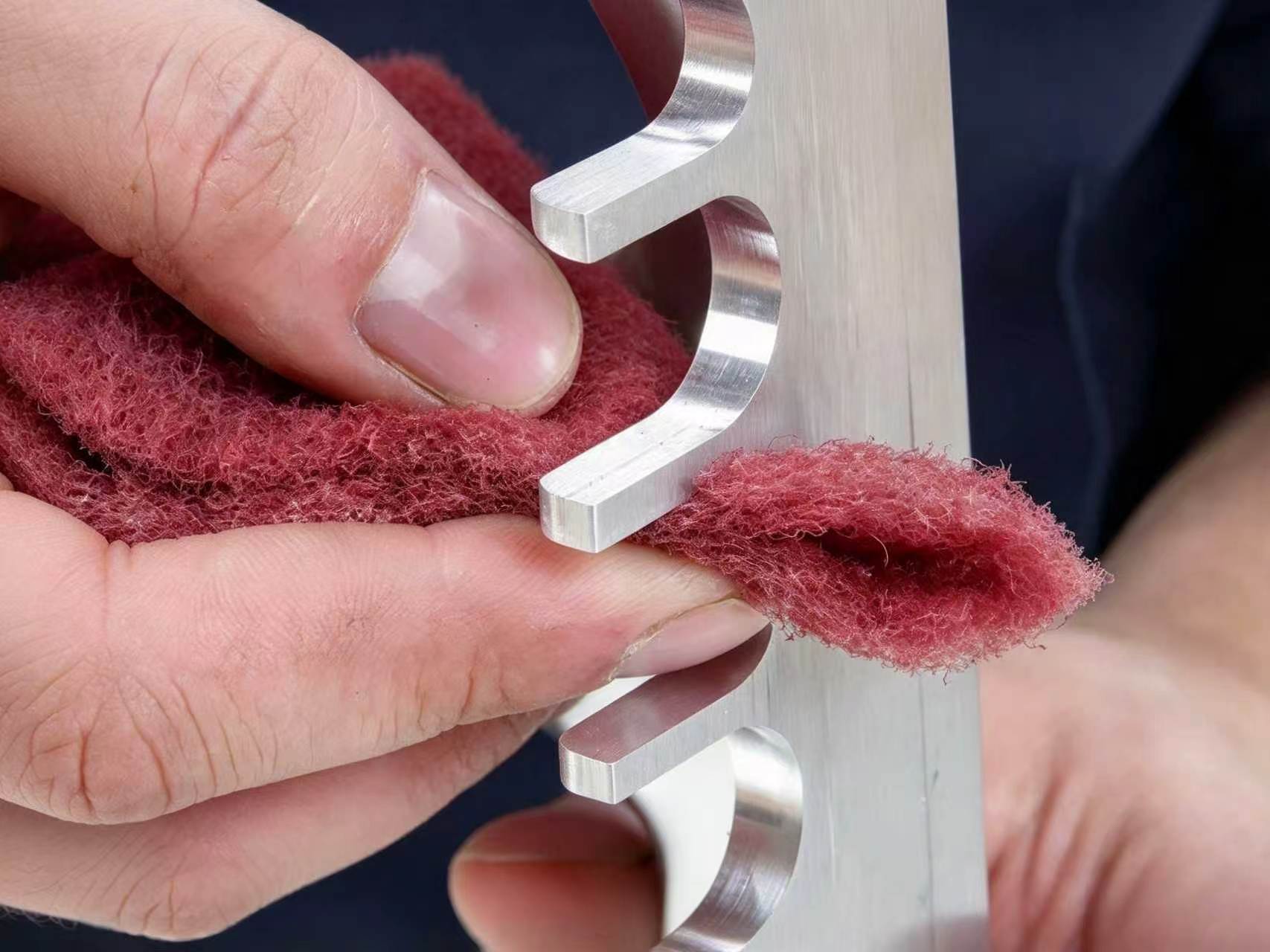
Some industrial pads can be used dry or with water or a solvent permitted by their manufacturer. Wet operation may help carry away debris and heat, but the workpiece, resin system, and next process must be compatible with the chosen liquid. Check the product instructions rather than assuming every pad tolerates every cleaner. Whether working wet or dry, do not try to obtain more cutting by pressing harder in one spot. Excess local pressure can deepen the scratch, brighten an edge unevenly, or build up heat. On a stainless-steel finished surface, avoid reusing an abrasive previously used on carbon steel, because transferred particles can contaminate the surface and contribute to rust marks.
A Practical Selection Sequence
A practical selection sequence starts with the desired final surface: light deburring, weld blending, restoration of a directional grain, or scuffing before coating. Identify the substrate and the original defect next. Begin with a relatively fine grade on an inconspicuous sample, work in one direction under light, consistent pressure, and examine scratches, temperature, and the appearance of the transition. If removal is insufficient, step up in aggressiveness rather than immediately increasing force. Clean the workpiece and fixtures whenever moving from a coarse stage to a finer one so stray coarse grains do not spoil the finish. Record the product code and trial result for repeat orders. Consistent outcomes come from matching the grade, mineral, pressure, and process—not from relying on a supposedly universal color.
This post is also available in:


Leave a Reply
Want to join the discussion?Feel free to contribute!