
Behind the Edge: The Precision Manufacturing Process of Brown Corundum Cutting Discs
Meta Description: Learn the detailed manufacturing process of brown corundum cutting discs, from raw material selection to quality testing. Discover how these abrasive tools ensure high-performance cutting for metal, stone, and concrete. 
Introduction
Brown corundum cutting discs are widely used abrasive tools for cutting metal, stone, and concrete. Their hardness and wear resistance make them ideal for high-intensity cutting tasks. The production process involves multiple steps, from raw material preparation to final quality inspection. Below is a comprehensive overview of the manufacturing process. 
Raw Material Preparation
Brown Corundum Grit: Known for its hardness and durability, brown corundum is the primary abrasive. We customizable to specific product needs with grit sizes ranging from F14 to F120.
Substrate: The substrate, typically made of fiber cloth, steel mesh, or metal netting, enhances the disc’s strength and toughness. Common substrates include fiber-reinforced or steel-reinforced materials.
Bonding Agent: Resin (e.g., phenolic resin), metal, or ceramic binders secure the corundum grit to the substrate, ensuring the disc’s integrity during use. Resin binders are most common.
Additives: Chemical additives such as hardeners, antioxidants, or anti-wear agents may be included to improve performance. 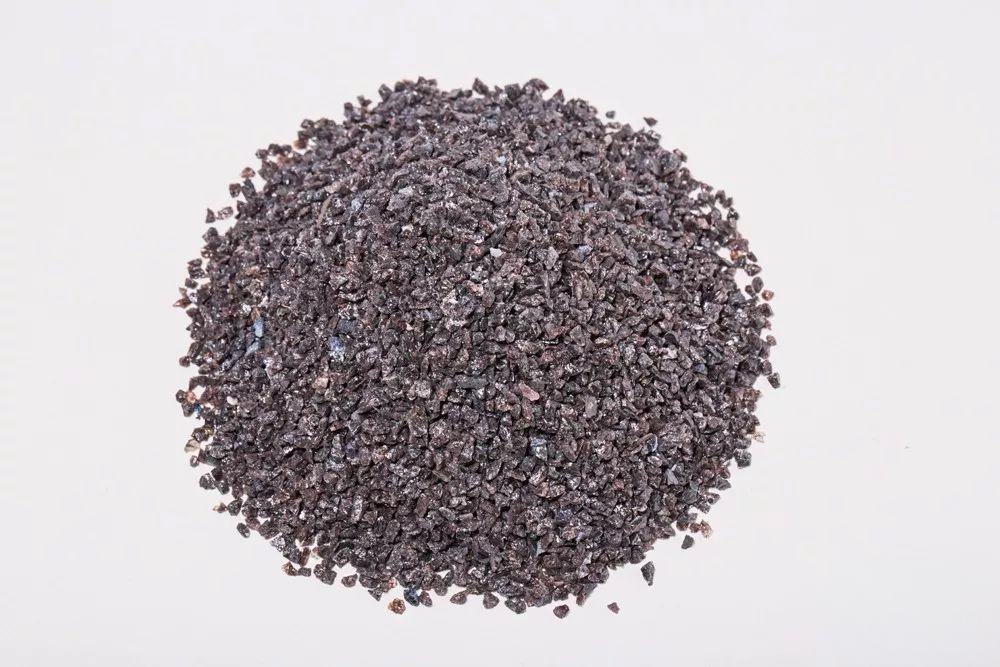
Grit Screening and Mixing
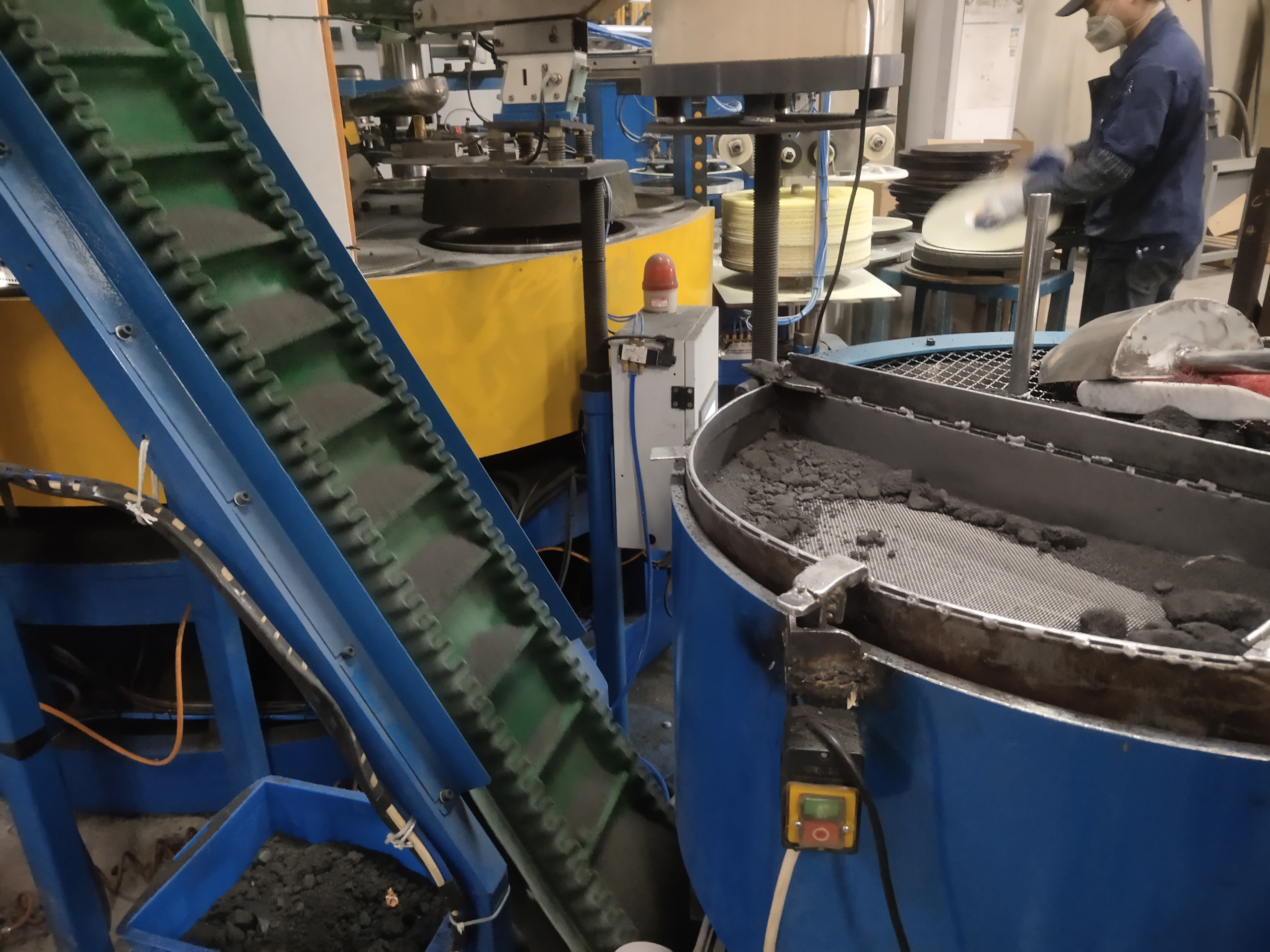
Screening: Brown corundum grit is screened to ensure uniform particle size, meeting design specifications. Oversized or undersized grains are removed to maintain cutting efficiency.
Mixing: The grit, bonding agent, and additives are blended in precise proportions, ensuring even distribution to avoid uneven cutting performance.
Coating and Pressing
Coating: The mixed grit and binder are applied to the substrate surface, typically fiber cloth or metal mesh, to reinforce the disc’s structure.
Pressing: The coated substrate and mixture are placed in a mold and pressed using a hydraulic press. Controlled pressure compacts the materials, ensuring uniform grit distribution and adhesion without damaging the substrate.
Drying and Curing
Drying: Pressed discs are dried at low temperatures to remove excess moisture and solvents, preventing damage to the substrate or binder.
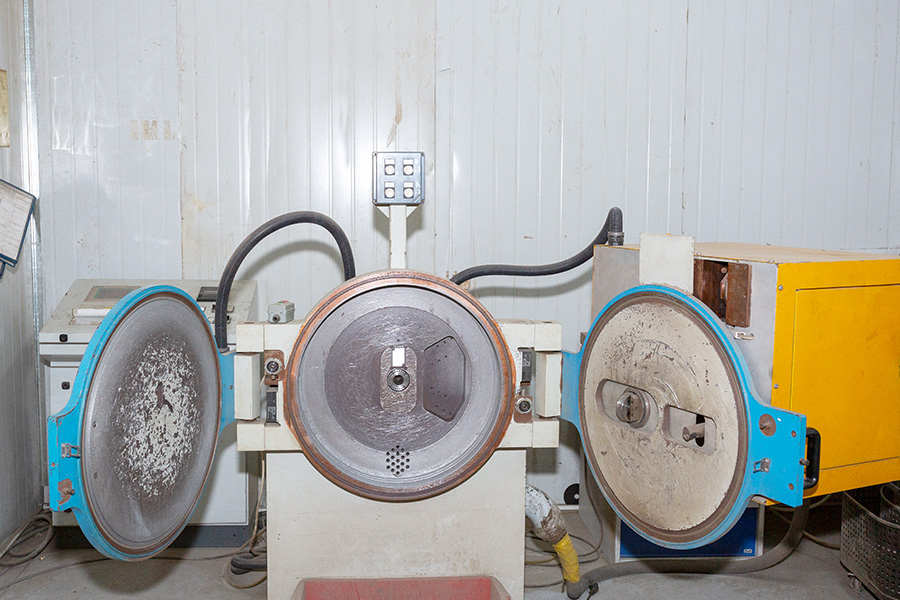
Curing: For resin-bonded discs, curing follows drying. The discs are heated at 150–180°C to harden the binder, ensuring durability and structural stability. Curing time varies based on disc specifications and binder type.
Cooling and Demolding
Cooling: Cured discs are gradually cooled to room temperature to avoid cracks caused by thermal stress.
Demolding: Cooled discs are removed from molds and inspected for cracks, defects, or loose grit.
Trimming and Cutting
Trimming: Uneven edges are smoothed using grinding machines or trimmers to ensure flatness and aesthetic quality.
Cutting: Discs are cut to final specifications (e.g., diameter, thickness) using precision methods like laser cutting or drilling to meet dimensional requirements.

Quality Inspection
Visual Inspection: Discs are checked for cracks, deformities, or loose grit.
Hardness Testing: A hardness tester verifies the disc’s ability to handle cutting tasks.
Wear Resistance Testing: Laboratory tests assess the disc’s durability during use.
Balance Testing: Professional equipment ensures the disc is balanced to prevent vibrations during operation.
Impact Resistance Testing: Tests confirm the disc’s ability to withstand high-speed cutting without fracturing.
Packaging and Storage
Packaging: Qualified discs are packaged based on customer requirements, using plastic bags, cartons, or wooden crates to prevent damage during transport.
Storage: Discs are stored in dry, well-ventilated areas to avoid moisture or high temperatures, which can degrade quality. Resin-bonded discs should be kept away from direct sunlight or humid environments to maintain binder stability.

Conclusion
The production of brown corundum cutting discs involves raw material selection, mixing, coating, pressing, curing, trimming, and rigorous quality testing. Each step is critical, as any oversight can impact the disc’s performance and lifespan. Strict process control and thorough inspections ensure these discs deliver efficiency, stability, and safety in cutting applications.
This post is also available in:


Leave a Reply
Want to join the discussion?Feel free to contribute!