
Silicon Carbide vs Zirconia Alumina Belts for Stainless Steel Grinding
When grinding or finishing stainless steel, many operators encounter the same problem: the sanding belt works well at the beginning, but after a short period of use, the abrasive surface becomes shiny, smooth and covered with metal residue. The belt loses its cutting ability and starts generating more heat instead of removing material efficiently.
This phenomenon is known as abrasive belt loading or belt clogging. It is especially common when using silicon carbide sanding belts on stainless steel.
Many users try to solve the problem by adjusting pressure, speed or grinding methods. However, in many cases, the main reason is not the machine setting but the compatibility between the abrasive grain and the workpiece material.
Compared with silicon carbide, zirconia alumina (ZA) sanding belts are usually more suitable for stainless steel applications because of their higher toughness, self-sharpening behavior and better performance under heavy grinding conditions.
Understanding the difference between these abrasive grains helps manufacturers choose the right belt, improve productivity and reduce unnecessary abrasive consumption.
1. Why Does Silicon Carbide Belt Loading Happen on Stainless Steel?
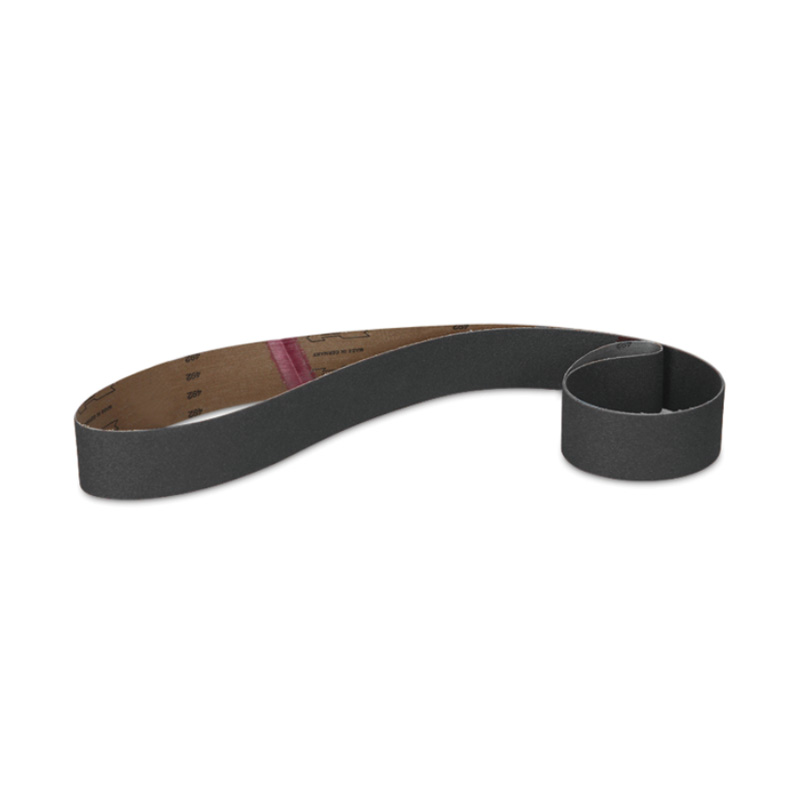
Silicon carbide (SiC) is a high-hardness abrasive with very sharp cutting edges. Its hardness is higher than aluminium oxide, which makes it excellent for applications such as glass, stone, ceramics and non-ferrous metals.
However, stainless steel presents a completely different challenge.
Materials such as 304 and 316 stainless steel have strong ductility and work-hardening characteristics. During grinding, the surface layer of stainless steel can become harder because of mechanical deformation caused by the abrasive grain.
When a silicon carbide grain contacts this hardened layer, the grain may not cut efficiently into the material. Instead, the sharp edge can wear or fracture quickly. The broken abrasive particles then mix with stainless steel chips and accumulate between the abrasive grains.
As more metal particles fill the spaces between grains, the belt surface becomes covered with a metallic layer. The abrasive can no longer make direct contact with the workpiece, causing a transition from cutting action to friction.
This creates a cycle:
Less cutting → More friction → Higher temperature → More metal adhesion → Faster loading
Eventually, the belt becomes smooth and shiny, and the operator may feel that the abrasive has “stopped working”.
2. The Hidden Reason: Abrasive Grain Properties Matter
The difference between silicon carbide and zirconia alumina is not only their hardness. The real difference lies in their microstructure, fracture behaviour and how they maintain cutting ability during grinding.
An abrasive grain is essentially a small cutting tool. During operation, the grain needs to perform three basic functions:
- Penetrate into the workpiece material;
- Remove material through cutting action;
- Maintain sharp edges during continuous grinding.
Abrasive grains with different structures achieve these functions in different ways.
Silicon carbide has a sharp crystal structure and excellent initial cutting ability. However, its relatively brittle nature means that the grain can fracture suddenly under heavy pressure or impact. Once large pieces of the grain break away, the abrasive surface may lose cutting points faster.
For applications such as glass, stone and aluminium, this behaviour can be an advantage because the material does not usually create severe loading problems. However, when grinding stainless steel, the combination of material toughness, heat generation and metal adhesion makes this characteristic less suitable.
3. Why Zirconia Alumina Performs Better on Stainless Steel
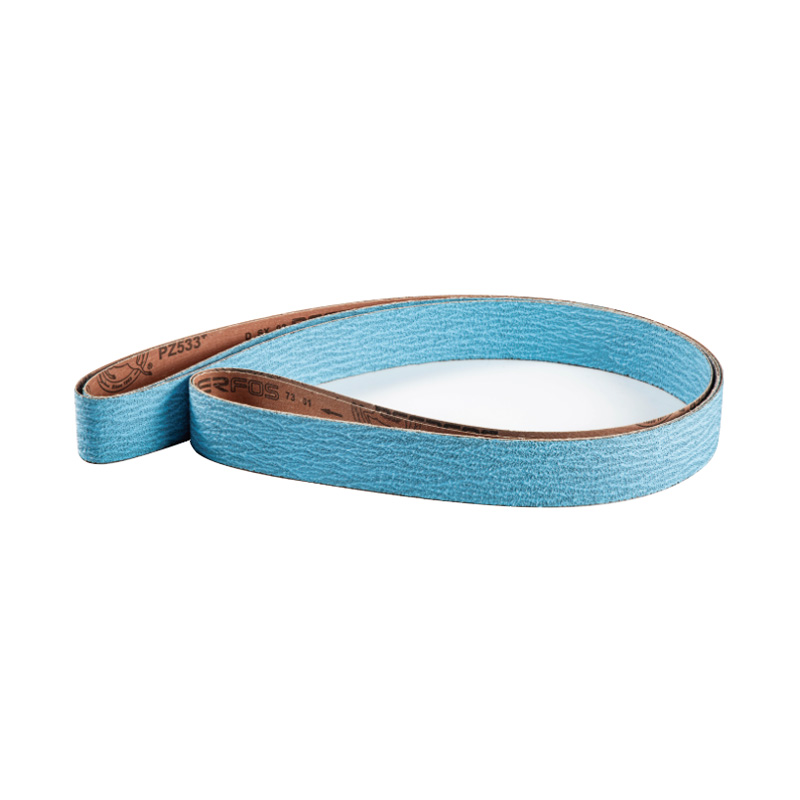
Zirconia alumina (ZA), also known as zirconium oxide aluminium oxide abrasive, was developed to solve demanding grinding problems where conventional aluminium oxide may not provide enough durability.
A typical ZA40 abrasive contains approximately 60% aluminium oxide (Al₂O₃) and 40% zirconium oxide (ZrO₂). During manufacturing, these components form a unique crystalline structure that combines hardness with improved toughness.
The most important advantage of zirconia alumina is its self-sharpening behaviour.
During grinding, the cutting edge of an abrasive grain gradually becomes worn. Instead of losing a large part of the grain immediately, zirconia alumina tends to develop controlled micro-fractures. Small pieces break away and expose new sharp edges, allowing the abrasive to continue cutting.
This continuous process is why zirconia alumina belts perform well in heavy-duty applications such as stainless steel grinding, weld removal and surface preparation.
The abrasive does not simply remain sharp for a long time. More importantly, it can continuously renew its cutting ability during use.
Another important difference is toughness.
Stainless steel grinding often requires high pressure and stable abrasive performance. If the grain breaks too easily, the belt loses efficiency and creates more loose abrasive particles that can contribute to loading.
Zirconia alumina grains are designed to withstand higher grinding forces while maintaining controlled fracture behaviour. This allows the belt to work effectively under heavier pressure, which is one reason ZA belts are widely used in metal fabrication industries.
4. Silicon Carbide vs Zirconia Alumina: Practical Comparison
Although silicon carbide and zirconia alumina are both high-performance abrasive grains, they are designed for different working conditions.
The best abrasive is not determined only by hardness. The key is whether the grain properties match the material being processed.
Silicon carbide has excellent sharpness and cutting ability at the beginning of use. It is commonly selected for applications where a clean cutting action and low grinding resistance are important, such as:
- Aluminium and other non-ferrous metals;
- Glass;
- Stone;
- Ceramics;
- Certain finishing applications.
These materials usually do not create strong work hardening or severe metal adhesion problems, allowing silicon carbide to perform effectively.
Zirconia alumina, on the other hand, is more suitable for tough metals that require continuous cutting performance under pressure, including:
- Stainless steel;
- Carbon steel;
- Structural steel;
- Weld grinding;
- Heavy stock removal applications.
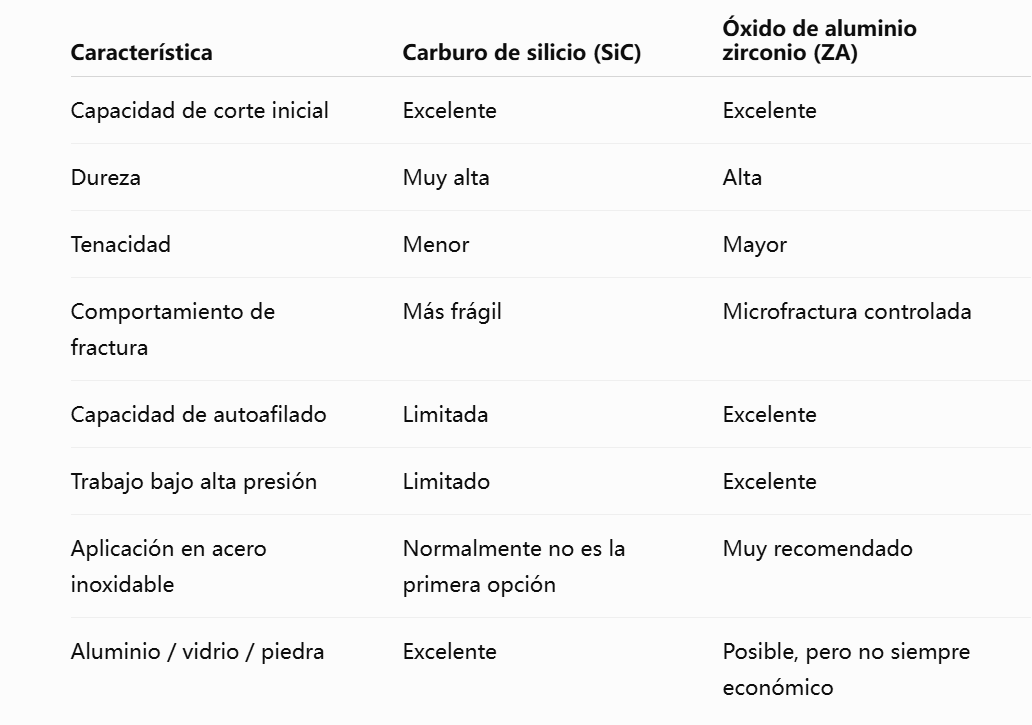
The following comparison shows why the two abrasive grains perform differently:
5. Optimizing Stainless Steel Grinding Performance
Changing from silicon carbide to zirconia alumina is often the first step to reduce belt loading, but abrasive selection alone is not enough.
Grinding performance depends on the complete system, including abrasive grain, belt construction, machine condition and operating parameters.
Several factors should be considered when grinding stainless steel:
1. Grinding Pressure
Zirconia alumina performs best when enough pressure is applied. The self-sharpening mechanism depends on controlled micro-fracture, which requires sufficient grinding force.
If the pressure is too low, the grain may become dull without effectively renewing its cutting edges.
For heavy stainless steel grinding, a harder contact wheel and stable pressure control are often recommended.
2. Grinding Speed
Grinding speed is another important factor when processing stainless steel.
A higher belt speed does not always mean better efficiency. If the speed is too high, the abrasive grain may have less time to penetrate into the material. Instead of creating effective cutting action, the process may generate more friction and heat, increasing the risk of loading.
For many stainless steel applications, a balanced belt speed combined with sufficient pressure provides better results than simply increasing speed.
The ideal working speed depends on the belt specification, machine type, workpiece shape and grinding method. Therefore, speed should always be optimized together with abrasive type and pressure.
3. Cooling and Lubrication
Heat management is especially important when grinding stainless steel.
Compared with carbon steel, stainless steel has lower thermal conductivity, which means heat generated during grinding is more concentrated in the contact area. Excessive temperature can increase metal adhesion and accelerate abrasive loading.
When possible, coolant can significantly improve grinding performance. A suitable grinding fluid helps remove heat, flush away metal particles and reduce direct contact between the abrasive grain and softened metal chips.
For dry grinding applications, selecting zirconia alumina belts with anti-loading coatings or grinding aids can help reduce material adhesion and extend belt life.
4. Choosing the Right Grit Size
Abrasive grain type is important, but grit size also affects grinding behaviour.
For stainless steel stock removal, coarse grits such as P36, P40 or P60 are commonly selected because they provide larger chip space and better material removal.
Using a very fine grit too early may increase loading because the spaces between abrasive grains are smaller and metal particles are more difficult to evacuate.
A common approach is to start with a coarser grit for material removal and gradually move to finer grits for surface refinement.
The correct grit sequence depends on the required finish, material removal target and production process.
6. Choosing the Right Abrasive for Different Applications
Silicon carbide is not a poor abrasive. It is simply better suited for different materials.
Its sharp cutting ability makes it an excellent choice for applications such as aluminium, glass, stone and ceramics, where loading is less of a concern.
Zirconia alumina is usually a better choice for stainless steel and other tough metals because it combines durability, controlled fracture and self-sharpening performance.
For even more demanding applications, such as aerospace alloys, titanium or high-pressure grinding, ceramic abrasives may provide additional advantages when the machine conditions allow their performance to be fully utilized.
The key is not finding one abrasive that works for every situation. The key is matching the abrasive grain, product construction and grinding conditions to the specific application.
Conclusion
Belt loading during stainless steel grinding is not simply a problem of machine settings. In many cases, it is a result of choosing an abrasive grain that does not match the material.
Silicon carbide provides excellent sharpness, but zirconia alumina offers better stability and self-sharpening behaviour for demanding stainless steel applications.
By selecting the correct abrasive, optimizing pressure, speed, cooling and grit sequence, manufacturers can improve productivity, reduce belt consumption and achieve more consistent surface quality.
The right abrasive does not only remove material. It improves the entire grinding process.
This post is also available in:


Leave a Reply
Want to join the discussion?Feel free to contribute!